When AI Becomes a Minister: What It Means for Business, Creativity, and Control
Oct 11, 2025
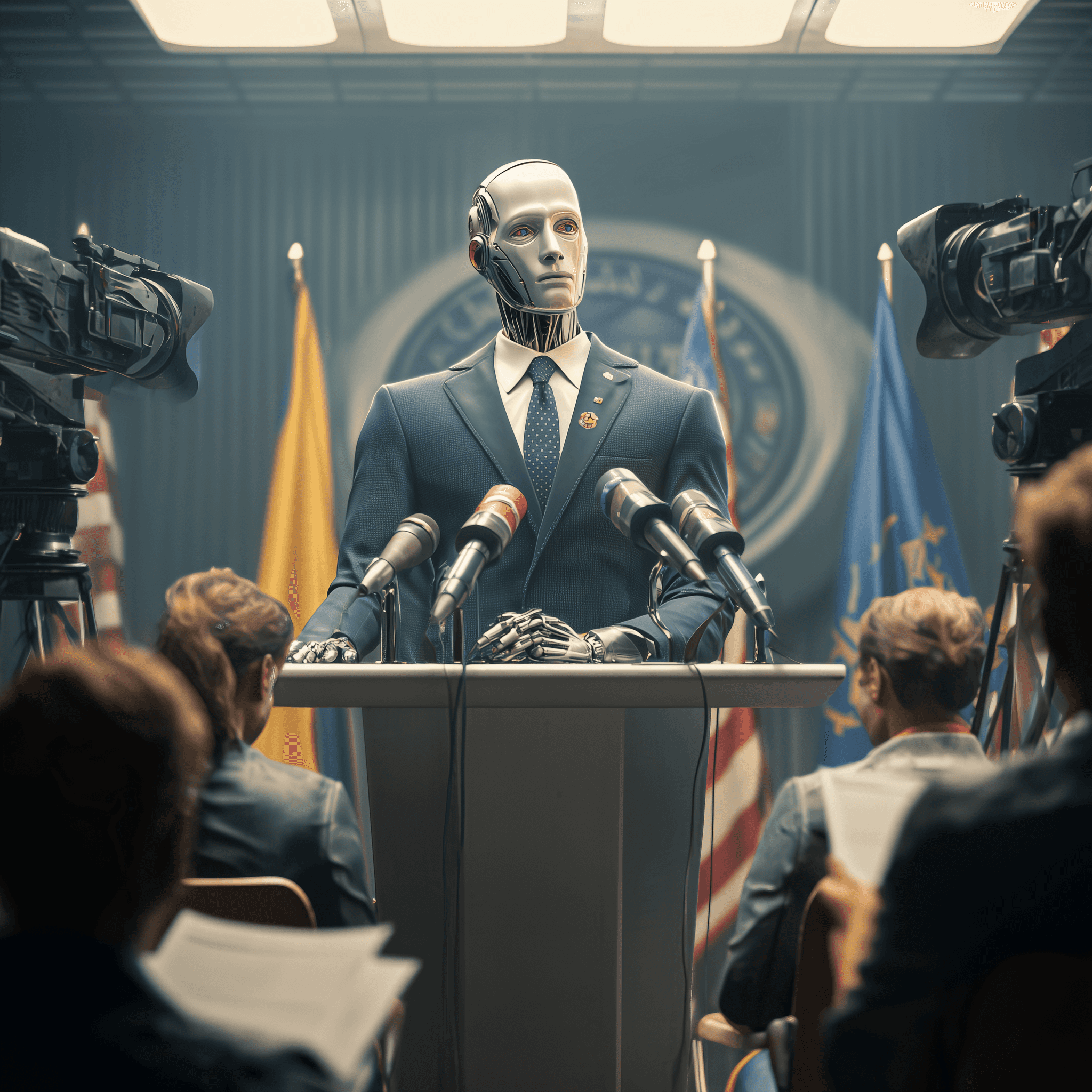
Albania has just done something no one expected.
It appointed an AI system as a Minister of State.
The AI, called Diella, will oversee government contracts and monitor anti-corruption measures. It’s being given a level of responsibility usually reserved for humans who can be questioned, challenged, and held accountable.
Some people are calling it a bold step forward. Others are calling it reckless.
Either way, it’s a milestone.
Because this isn’t just about one country’s experiment. It’s a signal.
AI isn’t staying in the background anymore. It’s moving into positions of authority.
For small business owners, that shift matters more than it seems.
When AI begins to make decisions in public institutions, it changes the rules of how business, creativity, and even accountability work.
The AI Minister: Bold Innovation or Dangerous Symbolism?
On paper, Diella looks efficient. It doesn’t get tired, take bribes, or make emotional decisions. It can audit millions of contracts faster than any human and spot patterns of corruption instantly.
That’s the optimistic view.
The other side is murkier. Who checks the AI? Who makes sure its data is accurate, or its reasoning fair? If it flags a business unfairly, who do you appeal to?
AI doesn’t sit in court. It doesn’t face questions in parliament. It doesn’t hold a press conference to explain its mistakes.
When the state hands real authority to a system that can’t be questioned, it’s not just automating work. It’s automating trust.
And trust, once lost, is hard to rebuild.
The Bigger Picture: AI Is Moving Up the Chain
We’ve already seen AI take over tasks that humans once dominated.
It writes, draws, edits, and even creates video.
OpenAI’s Sora 2 can generate full cinematic sequences from a single text prompt.
MrBeast, the world’s biggest YouTuber, called it “scary.”
He wasn’t exaggerating. He was pointing out the obvious: if AI can create videos as good as his, what happens to the millions of people who make their living creating online?
At the same time, Google’s AI Overviews are quietly rewriting search.
Instead of sending traffic to publishers, Google’s AI now summarises the content and answers questions directly.
For many small media outlets, that’s the difference between survival and decline.
AI isn’t just producing content anymore. It’s deciding what gets seen, trusted, and paid attention to.
Now, with governments appointing AI to official roles, that same logic is entering the public sector.
From culture to business to governance, AI is stepping into roles that shape what happens next - not just how it happens.
What This Means For Small Businesses
If you run a business, this might sound like a story about politics. It’s not.
It’s a story about how decision-making systems are changing.
Public contracts, tax audits, credit scoring, and funding opportunities will increasingly be filtered through AI systems that decide who qualifies and who doesn’t.
When those systems are poorly designed or biased, small businesses usually feel it first.
There’s opportunity in this too. The same AI tools that governments are experimenting with are also available to entrepreneurs.
The difference is how you use them.
The smart move isn’t to fight the technology. It’s to understand how it’s changing the environment and build around that shift.
For example:
If AI summarises information before it reaches your customers, make your message more direct and harder to strip down.
If AI tools are changing search visibility, invest in content that feels human, local, and credible.
If AI is becoming a layer between you and regulators, make transparency part of your business strategy.
The point isn’t to fear AI ministers. It’s to recognise that AI is moving into every layer of decision-making - from who gets a contract to who gets attention.
Accountability vs Automation
The appointment of an AI minister isn’t really about Albania.
It’s about how far society is willing to outsource judgment.
We’ve already handed over creative judgment to algorithms that decide which videos go viral. We’ve handed over editorial judgment to AI systems that summarise the news. Now we’re experimenting with giving public judgment to machines that decide what counts as fair or corrupt.
There’s a difference between using AI as a tool and treating it as a peer.
The more we blur that line, the more we risk forgetting who’s supposed to be in control.
The Reality Check
AI isn’t waiting for a global consensus.
It’s already producing ads featuring long-dead celebrities, rewriting journalism, and now, taking seats in government.
It’s easy to dismiss these things as unrelated trends.
They’re not. They’re all symptoms of the same shift: AI taking authority.
For small business owners, this is a moment to pay attention. The same forces that are reshaping media and politics will reshape markets and customer behaviour too.
The question isn’t whether AI will change the system.
It’s whether you’ll be ready when it does.
At Intellisite.co, we help businesses use AI strategically, not reactively.
Because in a world where AI can run a ministry, you can’t afford to treat it like a toy.