Gartner says AI-driven marketing automation will more than double by 2028. Most small businesses are still running workflows they built two years ago. This post explains the shift to agentic AI and what to do about it.
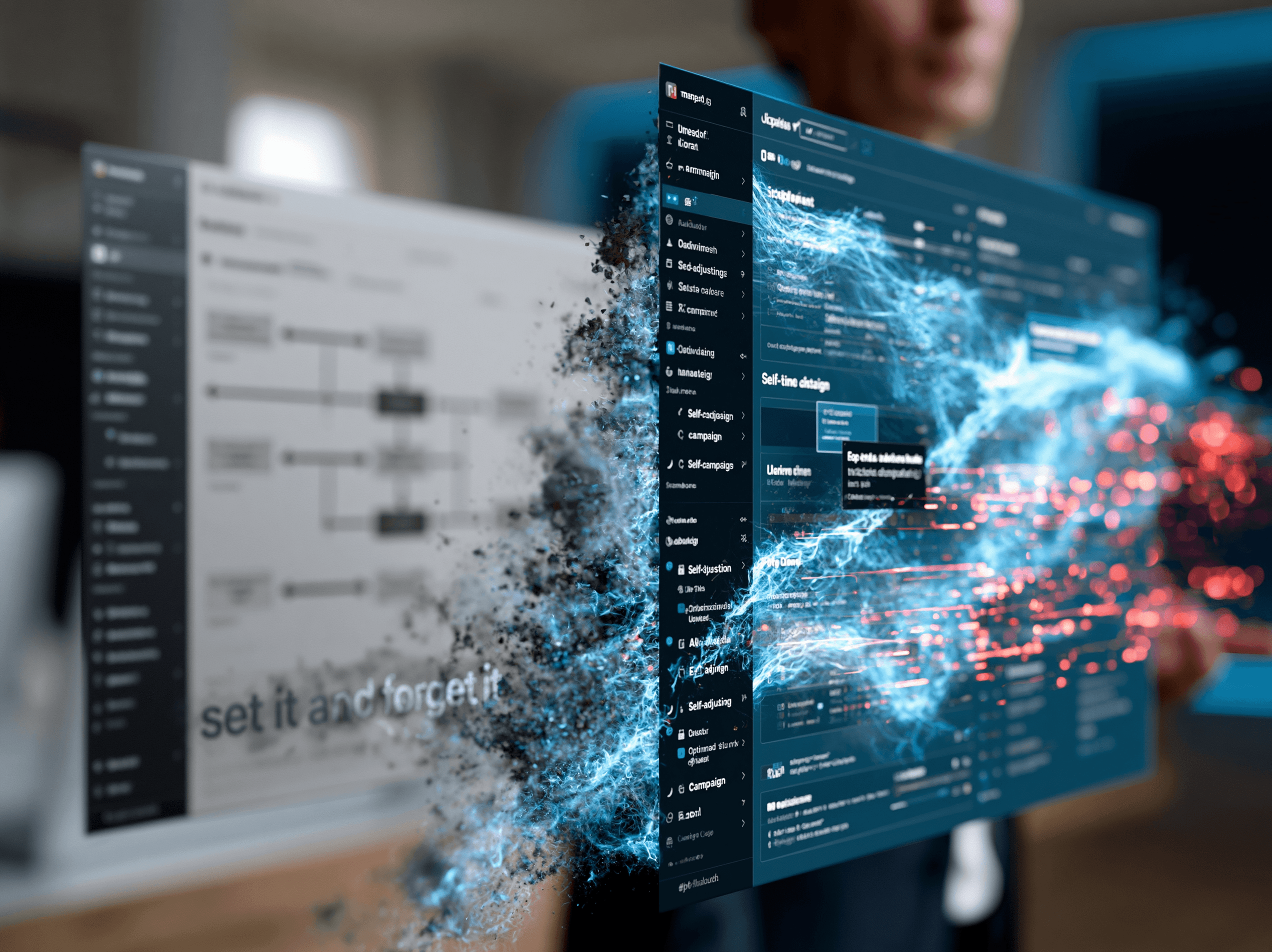
Your Marketing Automation Is Already Outdated and You Do Not Even Know It
Most small businesses think they have marketing automation. What they actually have is a series of if-then rules they set up eighteen months ago and never touched again.
Welcome email when someone signs up. Follow-up sequence three days later. Birthday discount on their anniversary. Maybe a review request after purchase. Sound about right?
That was automation in 2024. In 2026, it is the marketing equivalent of using a fax machine. It still technically works. But the businesses beating you have moved on to something fundamentally different.
Gartner just released a survey showing marketing leaders expect AI-driven automation of marketing work to more than double, jumping from 16% in 2026 to 36% by 2028. That is not a gradual shift. That is a complete transformation of how marketing gets done. And the businesses that do not see it coming are going to wonder why their campaigns stopped working.
The shift has a name: agentic AI. And it changes everything about how your marketing operates.
What Is Agentic AI Marketing and How Is It Different From Traditional Automation
Agentic AI marketing is the use of AI systems that do not just execute pre-configured workflows but actively plan, test, adapt, and optimise campaigns with minimal human instruction. Unlike traditional automation which follows rigid rules you set, agentic AI makes its own decisions based on real-time data and outcomes.
Traditional marketing automation works like a train on tracks. You build the tracks (the workflows), you load the passengers (your contacts), and the train follows the exact same route every single time. If the route is good, great. If market conditions change, customer behaviour shifts, or your offer gets stale, the train keeps running the same path regardless.
Agentic AI works more like a taxi driver who knows the city. You tell it where you want to go (more bookings, higher open rates, better lead quality) and it figures out the best route. If there is traffic, it reroutes. If a new shortcut opens up, it takes it. If the destination changes, it adapts.
In practical terms, this means your marketing system can now test different email subject lines and automatically shift to the winner without you touching it. It can identify which leads are most likely to convert and prioritise them in your pipeline. It can adjust ad spend in real time based on which campaigns are producing actual revenue, not just clicks. It can even modify the timing, frequency, and content of follow-up sequences based on individual customer behaviour.
This is not science fiction. Platforms are already building these capabilities into tools that small businesses can access for $20 to $100 per month. The question is not whether this technology exists. It is whether you are using it or still running on tracks you laid down two years ago.
Why Is Traditional Marketing Automation Failing Small Businesses
Traditional marketing automation is failing because it relies on static rules in a dynamic market, treats all customers the same regardless of their behaviour, and cannot learn or improve without manual intervention from an already time-poor business owner.
Here is the uncomfortable truth about most small business marketing automation: it was set up once, probably during a burst of enthusiasm after watching a YouTube tutorial or hiring a freelancer, and has been running on autopilot ever since. Nobody has reviewed the email sequences. Nobody has checked whether the timing still makes sense. Nobody has tested whether the offers are still relevant.
The result is what marketers call "automation decay." Your open rates slowly decline. Your click rates drop. Your unsubscribe rates creep up. But because everything is automated, you do not notice until the numbers are genuinely bad. By then, you have been sending increasingly irrelevant messages to your list for months.
Traditional automation also has a fundamental design flaw: it treats your audience as a monolith. Everyone who signs up gets the same welcome sequence. Everyone who abandons a cart gets the same recovery email. Everyone who has not purchased in 30 days gets the same re-engagement campaign. But your customers are not all the same. A first-time visitor needs different messaging than a repeat buyer. A price-sensitive customer responds to different triggers than a quality-focused one.
Research from Klaviyo's 2026 marketing automation trends report confirms that behaviour-driven and intent-based automation dramatically outperforms static rule-based systems. The businesses seeing the best results are the ones whose automation responds to what customers actually do, not what the business owner assumed they would do when setting up the workflow.
How Much Are Businesses Losing by Not Upgrading Their Marketing Automation
Businesses running outdated automation are losing between 20% and 40% of potential revenue from their existing customer base through missed opportunities, poorly timed messages, and failure to adapt to changing customer behaviour patterns.
Let us make this concrete. Say you have a list of 2,000 contacts. Your current automation sends a generic follow-up sequence that converts at 2%. That is 40 customers. A behaviour-driven agentic system that personalises timing, messaging, and offers based on individual actions might convert at 3.5% to 5%. That is 70 to 100 customers from the same list, with zero additional ad spend.
The maths gets more compelling when you factor in customer lifetime value. If your average customer is worth $500 over their lifetime, the difference between 40 and 80 conversions is $20,000 in revenue. From the same list. With the same product. Just smarter automation.
But the losses go beyond direct revenue. Outdated automation actively damages your brand. When you send someone an email about a product they already bought, or a discount on something they paid full price for last week, or a re-engagement campaign to someone who visited your site yesterday, you are telling that customer you do not know them. You are telling them they are just a name on a list.
In 2026, customers expect businesses to know them. Not in a creepy surveillance way, but in a "you should know I just bought from you last Tuesday" way. When your automation cannot manage even that basic level of awareness, customers notice. And they go to competitors whose systems are smarter.
The real cost of outdated automation is not the revenue you are missing today. It is the customers you are training to ignore you.
What Does Modern AI Marketing Automation Actually Do
Modern AI marketing automation actively monitors campaign performance across all channels, identifies patterns in customer behaviour, automatically adjusts messaging and timing for individual contacts, reallocates budget to top performers, and pauses underperforming elements before they waste money.
Here is what this looks like in practice for a small business. Imagine you run a service-based business. A potential customer visits your website, browses your services page, and leaves without booking. In a traditional automation setup, they might get a generic follow-up email 24 hours later.
With agentic AI, the system notes which specific services they viewed, how long they spent on each page, whether they started the booking process and abandoned it, and what time of day they were browsing. The follow-up is then tailored: it highlights the specific service they spent the most time on, it arrives at the time of day they were most active, and if they started booking and stopped, it addresses common objections for that specific service.
But it does not stop there. The system also learns from what happens next. If the customer opens the email but does not click, the system might try a different subject line approach next time. If they click but do not book, it might offer a lower-commitment entry point. If they book, it feeds that data back into the model so it can identify similar prospects in the future.
Real-time campaign optimisation is another game-changer. In 2026, AI-powered analytics platforms monitor your campaigns while they are running. They identify which creative assets are driving conversions, automatically allocate more budget to top performers, and pause underperforming elements before they waste your spend. This used to require a full-time marketing analyst. Now it happens automatically.
The shift from first-party data being optional to essential is also reshaping how smart automation works. Your email engagement data, website visit patterns, chatbot conversations, purchase history, and community interactions are the fuel that powers intelligent automation. Businesses that collect and connect this data have an enormous advantage over those still relying on third-party audiences and generic targeting.
Can Small Businesses Actually Afford Agentic AI Marketing
Yes. Entry-level AI marketing automation platforms with agentic capabilities start at $20 to $50 per month, with more comprehensive platforms available at $100 to $300 per month, making them accessible to virtually any small business that currently spends money on marketing.
This is the part that surprises most business owners. They assume agentic AI is enterprise technology with enterprise pricing. Five years ago, they would have been right. Today, the technology has democratised rapidly.
Tools like Klaviyo, ActiveCampaign, and GoHighLevel have built AI-driven features directly into their existing platforms. You do not need to buy a separate AI product. The intelligence is baked into the tools you might already be paying for. If you are on an older plan or have not explored new features in a while, you might be sitting on capabilities you are already paying for but not using.
For small businesses just starting, the entry point is remarkably affordable. A basic AI-powered email and SMS platform with behaviour-based automation runs $20 to $50 per month. Add an AI chatbot for your website and you are looking at $50 to $150 total. Layer in a CRM with predictive lead scoring and you are at $100 to $300.
Compare that to the cost of not using these tools: missed conversions, wasted ad spend, customer churn from irrelevant messaging, and hours spent manually managing campaigns that a system could handle automatically.
The businesses that will struggle are not the ones that cannot afford agentic AI. They are the ones that do not know it exists, or worse, the ones that think their two-year-old automation setup is still good enough. By the time they realise their competitors are using self-optimising systems, the gap may be too wide to close easily.
What Should You Do Right Now to Modernise Your Marketing Automation
Start by auditing your current automation for decay, then evaluate whether your existing platform offers AI-driven features you are not using, consolidate your customer data into a single platform, and activate behaviour-based triggers that replace your static workflows.
Step one is an honest audit. Open every automated workflow you have running. When was it last updated? Are the offers still current? Are the emails still relevant? Check your open rates, click rates, and conversion rates over the last six months. If they are declining, your automation is decaying.
Step two is a platform check. Log into your marketing platform and look for features you are not using. Many platforms have rolled out AI-driven capabilities in the last twelve months. You might have access to predictive send-time optimisation, AI-generated subject line testing, behaviour-based segmentation, or automated campaign optimisation that you simply have not switched on.
Step three is data consolidation. If your customer data lives in multiple places (one system for email, another for bookings, another for payments, another for chat), your AI has nothing meaningful to work with. The single most impactful thing you can do is bring your customer data into one platform. When your AI can see the full customer journey, from first touch to repeat purchase, it can make genuinely intelligent decisions.
Step four is activating behaviour-based triggers. Instead of sending the same email to everyone at the same time, set up automations that respond to specific actions: visited a pricing page, started but did not complete a booking, opened three emails in a row, made a purchase, left a review. Each of these behaviours tells you something about that customer's intent, and your messaging should reflect it.
The marketing automation landscape has fundamentally changed. The question is no longer whether to automate. It is whether your automation is smart enough to compete. Static workflows built on assumptions are being replaced by intelligent systems that learn, adapt, and improve with every interaction.
Your competitors are not just automating their marketing. They are letting AI run it. The only question is how long you can afford to wait before doing the same.